

-
1 dæmi
* * *n., usually in pl., [dómr.]1. an example, case; hörð dæmi, a hard fate, Hkv. 2. 2; úlfa d., the case ( doings) of wolves, Hðm. 30; kvenna d., womanish example, behaving like a woman, Þorst. St. 52; at mér verði vargsins d., Band. (MS.) 35: in plur., forn dæmi ok siðu foreldra sinna (cp. the Germ. weisthümer, alterthümer), old tales and customs of their forefathers, Fagrsk. ch. 219; þessi dæmi (i. e. verses) öll eru kveðin um þenna atburð, Mork. 114; þó hafa mörg dæmi orðið í forneskju, many things have happened in olden times, Ó. H. 73 (margs d., Fms. iv. 172, less correctly), cp. dæmi-saga; spekingr at viti ok at öllu fróðr, lögum ok dæmum (old lore, tales), mannfræði ok ættfræði, Fms. vii. 102; Ari prestr hinn Fróði, er mörg d. spakleg hefir saman töld, Bs. i. 145, cp. also Barl. 47, 73, 112; hence fá-dæmi, an unexampled, portentous thing; eins dæmi, in the proverb, eins dæmin eru vest, viz. a singular, unexampled fate is the worst: used even of pictures, a story represented by drawing, Pm. 122: gramm. a citation, proof, nú skal láta heyra dæmin, now let us hear the proofs, Edda 49; þessi dæmi ( those references) ok nóg önnur, Anecd. 6, 15, 18, 21; draga dæmi af bókum, Sks. 468.β. example, generally; djarfari en d. eru til, Fms. iv. 311; vita dæmi til e-s, Róm. 234; umfram d., or dæmum, unexampled, portentous, Stj. 143, Fms. i. 214, viii. 52; svá sem til dæmis at taka, to take an example. Mar. 40, Bs. ii. 116; hence the mod. adverb, til dæmis (commonly written short t.d. = e. g.), for example; sem d. finnask, Fagrsk. ch. 9, Barl. 50; meir en til dæma, beyond example, Stj. 87, 167, 179.γ. example for imitation (eptir-dæmi, example); eptir dæmum Kristinna manna, Fms. v. 319; eptir þínum dæmum, Niðrst. 4; d. dæmi af e-u, to take example by it, Greg. 134.2. judgment, only in compds as, sjálf-dæmi, rétt-dæmi, justice, etc.COMPDS: dæmafátt, dæmafróðr, dæmalauss, dæmamaðr. -
2 подражание
1. imitation2. mimicryон обладает даром подражания; он настоящая обезьяна — he is a great mimic
3. take-offСинонимический ряд:копирование (сущ.) имитацию; имитация; имитирование; копирование; обезьянничание -
3 dœmi
n.1) proof, reason; draga þeir eigi sízt til dœmis þar um, at, in proof of this they specially adduce the fact, that;2) incident, fact; þó hafa mörg dœmi orðit, í forneskju, yet many things have happened in elden times; hörð dœmi, hard fate; at eigi verði oss Adams dœmi, that the same shall not happen to us as to A.;3) tale, story (Ari prestr fróði, er mörg dœmisparklig hefir saman sett);4) poem, verses (þessi dœmi öll eru kveðin um þenna atburð);5) quotation (draga fram dœmi af bókum);6) example for imitation, model (eptir dœmum kristinna manna); taka dœmi af e-m, to take an example by one;7) example, instance, precedent (djarfari en dœmi munu til vera); umfram dœmi, ór dœmum, unexampled, unprecedented (kom þá svá mikill snjór, at þat var ór dœmum); meirr en til dœmis or til dœma at taka (draga), to take an example. -
4 exemplum
exemplum, i, n. [eximo], orig., what is taken out as a sample (cf. eximius, from eximo), a sample.I.Prop. (cf. exemplar, specimen):II.purpurae, tritici,
Auct. Her. 4, 6, 9.—Hence,Transf.A. 1.Hic quoque exemplum reliquit, Plaut. Ps. 2, 2, 56; cf.:2. B.o Apella, o Zeuxis pictor, Cur numero estis mortui? hinc exemplum ut pingeretis: Nam alios pictores nihil moror hujusmodi tractare exempla,
id. Poen. 5, 4, 102 sq.; and in a pun with the follg. signif. under B.: Th. Exempla edepol faciam ego in te. Tr. Quia placeo, exemplum expetis, id. Most. 5, 1, 67:aedes probant: sibi quisque Inde exemplum expetunt,
a sketch, draught, id. ib. 1, 2, 21; cf. id. ib. 3, 2, 75 sq.:Pompeii litterarum ad consulem exemplum attulit: Litterae mihi a L. Domitio allatae sunt: earum exemplum infra scripsi... Deinde supposuit exemplum epistolae Domitii, quod ego ad te pridie miseram,
a transcript, copy, Cic. Att. 8, 6, 1 sq.; 8, 11, 6; 7, 23, 3; id. Fam. 9, 26, 3; Ov. Tr. 1, 7, 23 al.—A sample for imitation, instruction, proof, a pattern, model, original, example, precedent, case (the predominant meaning of the word).1.In gen.:2.ut mutum in simulacrum ex animali exemplo veritas transferatur,
from a living model, original, Cic. Inv. 2, 1, 2; cf.:feruntur enim ex optimis naturae et veritatis exemplis,
id. Off. 3, 17, 69:propones illi exempla ad imitandum,
id. Phil. 10, 2, 5; cf.:habere exemplum ad imitandum (corresp. to exemplar),
id. Mur. 31, 66; and:nostris exemplo fuit ad imitandum,
Suet. Gramm. 2:exposita ad exemplum nostra re publica,
Cic. Rep. 1, 46 fin.; cf. id. ib. 2, 31 fin.:loquimur de iis amicis, qui ante oculos sunt... Ex hoc numero nobis exempla sumenda sunt,
id. Lael. 11, 38:aliquem ex barbatis illis exemplum imperii veteris, imaginem antiquitatis,
id. Sest. 8, 19:a sapiente petitur exemplum,
id. Off. 3, 4, 16:exemplum a me petere,
Liv. 7, 32, 12:ab eodem Pompeio omnium rerum egregiarum exempla sumantur,
Cic. de Imp. Pomp. 15, 44:ab se ipso exemplum capi posse,
Liv. 1, 49, 2; cf.:cum et ipse sis quasi unicum exemplum antiquae probitatis et fidei,
Cic. Rep. 3, 5:quod in juventute habemus illustrius exemplum veteris sanctitatis?
id. Phil. 3, 6, 15:innocentiae,
id. de Or. 1, 53, 229:qua in muliere etiam nunc quasi exempli causa vestigia antiqui officii remanent,
as a pattern, example, id. Rosc. Am. 10, 27 (cf. infra, 2.):eum virum, unde pudoris pudicitiaeque exempla peterentur,
id. Deiot. 10, 28:firmare animum constantibus exemplis (for constantiae),
Tac. A. 16, 35; cf.:exemplum modestum,
id. H. 2, 64:vitiosi principes plus exemplo quam peccato nocent,
by their example, Cic. Leg. 3, 14, 32:(Tullus Hostilius) de imperio suo, exemplo Pompilii, populum consuluit curiatim,
id. Rep. 2, 17:quod autem exemplo nostrae civitatis usus sum, etc.,
id. ib. 2, 39: atrox videbatur Appi sententia;rursus Vergini Larciique exemplo haud salubres,
i. e. judged by the precedent, Liv. 2, 30 init.:divinare morientes etiam illo exemplo confirmat Posidonius, quo affert, etc.,
by that example, that case, Cic. Div. 1, 30, 64; id. Inv. 1, 30, 49; cf.:hinc illa et apud Graecos exempla... levitatis Atheniensium crudelitatisque in amplissimos cives exempla,
id. Rep. 1, 3:datum in omnes provincias exemplum,
Tac. A. 1, 78; so,dare exemplum,
to set the example, id. ib. 4, 50:tertia legio exemplum ceteris praebuit,
id. H. 2, 85; 4, 52; Val. Max. 3, 6, 5.—Esp. in phrase: exempli causā or gratiā, for instance, for an example (cf. Krebs, Antibarb. p. 437):3.exempli causa paucos nominavi,
for example's sake, Cic. Phil. 13, 2, 2; cf.:quia in alicujus libris exempli causa id nomen invenerant, putarunt, etc.,
id. Mur. 12, 27; id. Inv. 1, 37, 66:haec exempli gratia sufficient,
Quint. 9, 2, 56; cf.:pauca exempli gratia ponam,
id. 6, 5, 6; 5, 10, 110; cf.:ex quibus in exemplum pauca subjeci,
Suet. Tib. 21 et saep.:venit in exemplum furor,
teaches, Ov. F. 4, 243; cf. Just. 23, 3.—In partic., a warning example, an example, warning, punishment (rare):4.exemplum statuite in me, ut adolescentuli vobis placere studeant potius quam sibi,
Ter. Heaut. prol. 51; cf.:quibus liberi sunt, statuite exemplum, quantae poenae in civitate sint hominibus istiusmodi comparatae,
Auct. Her. 4, 35, 47:simile in superiore parte provinciae edere exemplum severitatis tuae,
Cic. ad Q. Fr. 1, 2, 5; cf. Tac. A. 3, 36 fin.; so,edere exempla in aliquem,
Ter. Eun. 5, 7, 21; Caes. B. G. 1, 31, 12; Liv. 29, 27, 4:ut ne viderem, quae futura exempla dicunt in eum indigna,
Ter. Eun. 5, 4, 24:habet aliquid ex iniquo omne magnum exemplum,
Tac. A. 14, 44:meritum quidem novissima exempla Mithridatem,
i. e. the punishment of death, id. ib. 12, 20:esse in exemplo,
to serve as a warning, Ov. M. 9, 454; cf. Vulg. Judae, 7 al.:exemplo supplicii reliquos deterrere,
Hirt. B. G. 8, 44, 1.—Law t. t., a precedent:C.ad exemplum trahere,
Just. Inst. 1, 2, 6:alicui sine exemplo subvenire,
id. ib. —A way, manner, kind, nature:multi more isto atque exemplo vivunt,
Plaut. Bacch. 3, 6, 11; cf.:negat se more et exemplo populi Romani posse iter ulli per provinciam dare,
Caes. B. G. 1, 8, 3:uno exemplo ne omnes vitam viverent,
Plaut. Mil. 3, 1, 132:istoc exemplo,
id. ib. 2, 4, 6:quot me exemplis ludificatust,
id. Ep. 5, 2, 6:eodem exemplo, quo,
Liv. 31, 12, 3:ad hoc exemplum,
Plaut. Mil. 2, 4, 6:quod ad exemplum,
id. Trin. 4, 2, 76 et saep.—Hence often of methods or examples of punishment (cf. 3. supra):quando ego te exemplis pessumis cruciavero,
Plaut. Capt. 3, 5, 33:omnibus exemplis crucior,
id. Bacch. 5, 1, 6; cf. id. Most. 1, 3, 35; 55; 5, 1, 67.—Freq. of the tenor, purport, contents of a letter, etc.:litterae uno exemplo,
i. e. of the same tenor, Cic. Fam. 4, 4, 1; 10, 5, 1:scribere bis eodem exemplo,
id. ib. 9, 16, 1:testamentum duplex... sed eodem exemplo,
Suet. Tib. 76:Capua litterae sunt allatae hoc exemplo: Pompeius mare transiit, etc.,
Cic. Att. 9, 6, 3:(litterarum) exemplum componere,
id. Agr. 2, 20, 53; Suet. Calig. 55. -
5 пример
1. (случай) instance; example; caseцитирам като пример cite as an example/illustrationпривеждам/давам пример give an example, name/adduce/cite an instanceпример от този род a case in point2. (за подражание) model. exampleдавам личен пример set an example, give a lead, show the way (на to)давам някого за пример hold s.o. up/cite s.o. as a modelпример за подражение an example to be imitated/to imitate/to followвземам някого за пример take s.o. as a model, follow s.o.'s exampleпрен. tread in the steps ofno примера на after the example of; in imitation of* * *прѝмер,м., -и, (два) прѝмера 1. ( случай) instance; example; case; като \пример by way of example/illustration; \пример от този род a case in point; служа за \пример на illustrate, exemplify; цитирам като \пример cite as an example/illustration;2. (за подражание) model example; вземам някого за \пример take s.o. as a model, follow s.o.’s example; давам личен \пример set an example, give a lead, show the way (на to); давам някого за \пример hold s.o. up/cite s.o. as a model; за \пример as an example/a model; по \примера на after the example of; in imitation of; следвам \примера на прен. tread in the steps of.* * *example: give an пример with - давам пример с, We should fight for peace after the пример of our ancestors. - Трябва да се борим за мир по примера на нашите предци.; illustration; model{`mOdxl}: You can take me as a пример. - Можеш да вземеш мен за пример.; pattern; type{taip}* * *1. (за подражание) model. example 2. (случай) instance;example;case 3. no ПРИМЕРa на after the example of; in imitation of 4. ПРИМЕР от този род а case in point 5. вземам някого за ПРИМЕР take s.o. as a model, follow s.o.'s example 6. давам ПРИМЕР за добро държане set an example/a model of good conduct 7. давам личен ПРИМЕР set an example, give a lead, show the way (на to) 8. давам някого за ПРИМЕР hold s.o. up/cite s.o. as a model: ПРИМЕР за подражение an example to be imitated/to imitate/to follow 9. за ПРИМЕР as an example/a model 10. като ПРИМЕР by way of example/illustration 11. прен. tread in the steps of 12. привеждам/давам ПРИМЕР give an example, name/ adduce/cite an instance 13. следвам ПРИМЕРa на follow the lead/example of 14. служа за ПРИМЕР serve as an example/a model 15. служа за ПРИМЕР на illustrate, exemplify 16. цитирам като ПРИМЕР cite as an example/illustration -
6 joya
f.1 jewel.el nuevo empleado es una joya the new worker is a real gemla joya de mi colección the pride of my collectionlas joyas de la corona the crown jewels2 Joya.* * *1 jewel, piece of jewellery (US jewelry)2 figurado treasure* * *noun f.* * *SF1) (=adorno) jewel, gemjoyas — jewels, jewellery, jewelry (EEUU)
joyas de fantasía — costume jewellery, imitation jewellery
2) (=objeto preciado) gem, treasure3) [de novia] trousseau* * *1) ( alhaja) piece of jewelry** * *= gem, jewel, cameo, crowning jewel.Ex. For example, DIAMONDS could not be a NT under CUTTING TOOLS as well as under gems.Ex. The article 'Part-time librarians: jewels of the profession' reports the results of a survey of US part time library staff.Ex. The article 'A passage to India: a bibliographical cameo' celebrates the bibliographical ties between the India and Britain.Ex. In this fully updated work, nearly 500 species and cultivars of the crowning jewels of water gardens, the water lilies and lotuses, are described.----* decorado con joyas = jewelled.* joya arquitectónica = architectural jewel.* joyas = jewellery [jewelry, -USA].* joyas de la corona = crown jewels.* joyas de la familia = family jewels.* la joya de = showpiece.* una joya = a little gem.* * *1) ( alhaja) piece of jewelry** * *= gem, jewel, cameo, crowning jewel.Ex: For example, DIAMONDS could not be a NT under CUTTING TOOLS as well as under gems.
Ex: The article 'Part-time librarians: jewels of the profession' reports the results of a survey of US part time library staff.Ex: The article 'A passage to India: a bibliographical cameo' celebrates the bibliographical ties between the India and Britain.Ex: In this fully updated work, nearly 500 species and cultivars of the crowning jewels of water gardens, the water lilies and lotuses, are described.* decorado con joyas = jewelled.* joya arquitectónica = architectural jewel.* joyas = jewellery [jewelry, -USA].* joyas de la corona = crown jewels.* joyas de la familia = family jewels.* la joya de = showpiece.* una joya = a little gem.* * *A (alhaja) piece of jewelry*sus joyas her jewelry o jewelslas joyas de la corona the crown jewelsCompuesto:piece o item of costume o imitation jewelryjoyas de fantasía costume jewelryB (cosa, persona) gemeste coche es una joya this car is a real gemes una joya literaria it is a literary gemuna joya de la arquitectura gótica a jewel of Gothic architecturemi marido es una joya my husband is a real treasure o gem* * *
joya sustantivo femenino
1 ( alhaja) piece of jewelry( conjugate jewelry);◊ joyas jewelry o jewels;
joya de fantasía piece o item of costume jewelry
2 ( persona) gem, treasure;
( cosa):
joya sustantivo femenino
1 jewel, piece of jewellery
joyas de imitación, imitation jewellery sing
2 (persona) es una joya, he's a real treasure
' joya' also found in these entries:
Spanish:
alfiler
- brazalete
- broche
- colgante
- collar
- pendiente
- pertenencia
- tasar
- tirar
- alhaja
- aparentar
- centelleante
- centellear
- chapa
- costoso
- destellar
- destello
- espléndido
- falso
- perla
- rescate
- valioso
- valorar
English:
glow
- jewel
- mount
- setting
- veneer
- gem
* * *joya nf1. [pieza de adorno] jewellas joyas de la corona the crown jewels;esa empresa es la joya de la corona del sector público that company is the jewel in the crown of the public sector;joya de familia family heirloom;joyas de fantasía costume jewellery2. [persona, cosa] gem;el nuevo empleado es una joya the new worker is a real gem;una de las joyas del arte barroco one of the jewels of baroque art* * *f1 jewel;joyas pl jewelry sg, Br jewellery sg ;joya de la corona jewel in the crown2 persona gem* * *joya nf1) : jewel, piece of jewelry2) : treasure, gemla nueva empleada es una joya: the new employee is a real gem* * *joya n1. (persona) treasure2. (adorno) piece of jewellery -
7 пример
м.1) (случай, приводимый для объяснения или доказательства) example, instanceприводи́ть приме́р — give an example, cite an example
для приме́ра разг. — as an example / model
2) ( образец) exampleподава́ть приме́р — set an example
приводи́ть в приме́р — cite as an example
ста́вить кого́-л в приме́р — hold smb up as an example
брать приме́р с кого́-л — follow smb's example
ли́чным приме́ром — by personal example
показа́ть приме́р (быть первым в чём-л) — give the lead
сле́довать приме́ру — follow suit
по приме́ру (рд.) — after the example (of); in imitation (of)
••не в приме́р (дт.) разг. — unlike (d); (+ сравн. ст.) far more
не в приме́р остальны́м он о́чень мно́го рабо́тает — unlike the others he works very hard
его́ расска́зы бы́ли не в приме́р интере́снее — his stories were far more interesting; his stories were more interesting by far
не в приме́р лу́чше — better by far
к приме́ру разг. — by way of example / illustration, for instance
-
8 wz|ór
m (G wzoru) 1. (deseń) design, pattern- kwiecisty/pasiasty wzór a floral/striped design a. pattern- dywan w jaskrawe wzory a brightly patterned carpet2. książk. (w masowej produkcji) line- jeden z naszych najpopularniejszych wzorów one of our most popular lines3. (do kopiowania, porównywania) model; (dokumentu, formularza, banknotu) specimen- wzór podpisu a specimen signature- być wzorem a. służyć za wzór dla czegoś to be a. serve as a model for sth4. (przykład, wzorzec) example, pattern- wzory zachowań patterns of behaviour- brać wzór z kogoś to follow sb’s example- na wzór a. wzorem kogoś following the example of sb- na wzór czegoś on the pattern of sth, in imitation of sth5. (zasada postępowania) model, pattern 6. (ideał) (shining) example, (role) model- wzór taktu/prawości a model of tact/fairness- stawiać kogoś za wzór (komuś) to hold sb up as a model (for sb)- jest wzorem ojca he is a model father7. Chem., Fiz., Mat. (ciąg symboli) formula- □ wzór cebulowy Szt. onion pattern- wzór kulturowy Socjol. cultural pattern- wzór norweski Włók. Norwegian pattern- wzór redukcyjny Mat. reduction formula- wzór rekurencyjny Mat. recurrence formula- wzór strukturalny Chem. structural formula- wzór sumaryczny Chem. molecular formulaThe New English-Polish, Polish-English Kościuszko foundation dictionary > wz|ór
-
9 exemplum
exemplum ī, n [EM-], a sample, specimen: hominum exempla, i. e. representatives of the race, O.— An imitation, image, portrait, draught, transcript, copy: earum (litterarum), S.: epistulae.— A pattern, model, original, example, precedent, incident, case: simulacrum ab animali exemplo transfertur: litterarum, a draft: exempla ad imitandum: naturae et veritatis: Ex hoc numero (amicorum) nobis exempla sumenda sunt: vir exempli recti: in oculis exemplum erat Fabius, L.: exemplum a me petere, L.: qui exemplum et rectores habebantur, Ta.: spinas Traxit in exemplum, O.: habuerunt virtutes spatium exemplorum, i. e. room to show themselves, Ta.: quasi exempli causā, as an example: sequimur exempla deorum, O.: sententiae exemplo haud salubres, i. e. by becoming a precedent, L.: mala exempla ex rebus bonis orta sunt, S.: illo exemplo confirmat, etc., by that instance: Venit in exemplum furor, served as a lesson, O.: exempli causā paucos nominavi, for example's sake: exempli gratiā.— A warning example, warning, lesson, penalty: Exemplum statuite in me, ut, etc., T.: simile severitatis tuae: in eos omnia exempla cruciatūsque edere, Cs.: ea in civitatem exempli edendi facultas, L.: in eum indigna, T.: esse in exemplo, to serve as a warning, O. — A way, manner, kind, nature: more et exemplo populi R. iter dare, Cs.: eodem exemplo quo, L.: exemplo nubis aquosae Fertur, after the manner of, O.— A tenor, purport, contents: litterae uno exemplo: scribere bis eodem exemplo: hoc exemplo, as follows.* * *example, sample, specimen; instance; precedent, case; warning, deterent; pattern, model; parallel, analogy; archtype; copy/reproduction, transcription -
10 perla
f.1 pearl.de perlas (figurative) great, fineme viene de perlas it's just the right thing2 Perla.3 perle.pres.indicat.3rd person singular (él/ella/ello) present indicative of spanish verb: perlar.imperat.2nd person singular (tú) Imperative of Spanish verb: perlar.* * *1 pearl2 figurado gem\collar de perlas pearl necklaceperla cultivada cultured pearl* * *noun f.* * *SF pearlde perlas —
perla cultivada — cultured pearl, cultivated pearl
* * *Ide perlas — (fam)
me viendría de perlas — it would suit me down to the ground
marcha de perlas — it's going really well
IItodo salió de perlas — everything went perfectly o (colloq) fine
masculino y femeninoa) (fam) ( persona ideal) gem (colloq)b) (Chi fam) ( fresco) sassy (AmE) o (BrE) cheeky devil (colloq)* * *= pearl, nugget.Ex. There are also some errors, as for example the entry pearl, The, Middle English poem, XBV, which should be YBV (XBV is Czech literature).Ex. Additionally, we were hoping to discover where and to what extent literature nuggets are hidden in non-LIS databases.----* collar de perlas = string of pearls.* cultivo de perlas = pearl culture.* estar hecho un perla = be a bit of a lad.* ir de perlas = come up + a treat, work + a treat, go down + a treat.* salir de perlas = come up + a treat, go down + a treat.* * *Ide perlas — (fam)
me viendría de perlas — it would suit me down to the ground
marcha de perlas — it's going really well
IItodo salió de perlas — everything went perfectly o (colloq) fine
masculino y femeninoa) (fam) ( persona ideal) gem (colloq)b) (Chi fam) ( fresco) sassy (AmE) o (BrE) cheeky devil (colloq)* * *= pearl, nugget.Ex: There are also some errors, as for example the entry pearl, The, Middle English poem, XBV, which should be YBV (XBV is Czech literature).
Ex: Additionally, we were hoping to discover where and to what extent literature nuggets are hidden in non-LIS databases.* collar de perlas = string of pearls.* cultivo de perlas = pearl culture.* estar hecho un perla = be a bit of a lad.* ir de perlas = come up + a treat, work + a treat, go down + a treat.* salir de perlas = come up + a treat, go down + a treat.* * *1 (joya) pearlun collar de perlas a pearl necklace, a string of pearlsel negocio marcha de perlas business is great o is going really wellel viernes me vendría de perlas Friday would be great for me o would suit me down to the groundtodo salió de perlas everything went perfectly, everything turned out fine ( colloq)Compuestos:artificial pearl● perla cultivada or de cultivocultured pearl● perla natural or verdaderanatural pearl* * *
Del verbo perlar: ( conjugate perlar)
perla es:
3ª persona singular (él/ella/usted) presente indicativo2ª persona singular (tú) imperativo
perla sustantivo femenino ( joya) pearl;
perla cultivada or de cultivo cultured pearl
perla sustantivo femenino
1 pearl
2 fig (persona) gem
ser una perla, to be a treasure
♦ Locuciones: de perlas: todo marcha de perlas, everything's going well, me viene de perlas, it suits me very well
' perla' also found in these entries:
Spanish:
gris
- auténtico
- concha
English:
cultured pearl
- pearl
- mother
* * *perla nf1. [joya] pearl;de perlas: su ayuda me viene de perlas her help is just what I neededperla artificial artificial pearl;perla cultivada cultured pearl;perla de cultivo cultured pearl;perla natural natural pearl2. [maravilla] gem, treasure;la nueva señora de la limpieza es una perla the new cleaning lady is a gem3. [frase desafortunada] gem* * *f pearl;nos vino de perlas fam it suited us fine fam* * *perla nf1) : pearl2)me viene de perlas: it suits me just fine* * *perla n pearl -
11 सावित्री _sāvitrī
सावित्री 1 A ray of light.-2 N. of a celebrated verse of the Rigveda, so called because it is addressed to the sun; it is also called गायत्री; q.v. for further information.-3 The ceremony of investi- ture with the sacred thread; आ षोडशाद् ब्राह्मणस्य सावित्री नातिवर्तते Ms.2.38.-4 N. of a wife of Brahman.-5 N. of Pārvatī.-6 N. of a wife of Kaśyapa.-7 An epithet of Sūryā (daughter of Savitṛi).-8 N. of the wife of Satyavat, king of Sālva. [She was the only daughter of king Aśvapati. She was so lovely that all the suitors that came to woo her were repul- sed by her superior lustre, and thus though she reached a marriageable age, she found no one ready to espouse her. At last her father asked her to go and find out a husband of her own choice. She did so, and having made her selection returned to her father, and told him that she had chosen Satyavat, son of Dyumatsena, king of Sālva, who being driven out from his kingdom was then leading a hermit's life along with his wife. When Nārada, who hap- pened to be present there, heard this, he told her as well as Aśvapati that he was very sorry to hear of the choice she had made, for though Satyavat was in every way worthy of her, yet he was fated to die in a year from that date, and in choosing him, therefore, Sāvitrī would be only choosing life-long widow-hood and misery. Her parents, therfore, naturally tried to dissuade her mind, but the high-souled maiden told them that her choice was unalterably fixed. Accordingly the marriage took place in due time, and Sāvitrī laid aside her jewels and rich apparel, and putting on the coarse garments of hermits, spent her time in serving her old father and mother-in-law. Still, though outwardly happy, she could not forget the words of Nārada, and as she counted, the days seemed to fly swifitly like moments, and the fated time, when her husband was to die, drew near. 'I have yet three days' thought she, 'and for these three days I shall observe a rigid fast.' She maintained her vow, and on the fourth day, when Satyavat was about to go to the woods to bring sacrificial fuel, she accompanied him. After having collected some fuel, Satyavat, being fatigued, sat down, and reposing his head on the bosom of Sāvitrī fell asleep. Just then Yama came down, snatched off his soul, and proce- eded towards the south. Sāvitrī saw this and fol- lowed the god who told her to return as her husband's term of life was over. But the faithful wife besought Yama in so pathetic a strain that he granted her boon after boon, except the life of her husband, until, being quite subdued by her devotion to her husband and the force of her eloquent appeal, the god relented and restored even the spirit of Satyavat to her. Deli- ghted she returned, and found her husband as if roused from a deep sleep, and informing him of all that had occurred, went to the hermitage of her father-in-law who soon reaped the fruits of the boons of Yama. Sāvitrī is regarded as the beau ideal or high- est pattern of conjugal fidelity, and a young married woman is usually blessed by elderly females with the words जन्मसावित्री भव, thus placing before her the example of Sāvitrī for lifelong imitation.]-Comp. -पतितः, -परिभ्रष्टः a man of any one of the first three castes not invested with the sacred thread at the proper time; cf. व्रात्य; सावित्रीपतिता व्रात्या व्रात्यस्तोमादृते क्रतोः Y.1.38; Ms.2.39; तान् सावित्रीपरिभ्रष्टान् व्रात्यानिति विनि- र्दिशेत् Ms.1.2.-व्रतम् N. of a particular fast kept by Hindu women on the last three days of the bright half of Jyeṣṭha to preserve them from widow- hood.-सूत्रम् the sacred thread (यज्ञोपवीत). -
12 statuo
stătŭo, ui, utum, 3, v. a. [statum, sup. of sto], to cause to stand (cf.: colloco, pono).I.Corporeally.A. 1.To set up, set in the ground, erect:2.ibi arbores pedicino in lapide statuito,
Cato, R. R. 18:inter parietes arbores ubi statues,
id. ib.:stipites statuito,
id. ib.:palis statutis crebris,
Varr. R. R. 1, 14 init.:pedamenta jacentia statuenda,
are to be raised, Col. 4, 26:pedamentum inter duas vitis,
Plin. 17, 22, 21, § 194:hic statui volo primum aquilam,
the standard of the troops, Plaut. Pers. 5, 1, 7:signifer, statue signum,
plant the ensign, Liv. 5, 55, 1; Val. Max. 1, 5, 1.—To plant (rare):3. a.eodem modo vineam statuito, alligato, flexatoque uti fuerit,
Plin. 17, 22, 35, § 198:agro qui statuit meo Te, triste lignum (i. e. arborem),
Hor. C. 2, 13, 10.—Without specifying the place:b.ollam statuito cum aqua,
let a jar stand with water, Cato, R. R. 156 (157):crateras magnos statuunt, i. e. on the table,
Verg. A. 1, 724; so,crateras laeti statuunt,
id. ib. 7, 147: haec carina satis probe fundata et bene statuta est, well placed, i. e. so that the hull stands perpendicularly (cf.:bene lineatam carinam collocavit, v. 42),
Plaut. Mil. 3, 3, 44:nec quidquam explicare, nec statuere potuerant, nec quod statutum esset, manebat, omnia perscindente vento,
Liv. 21, 58, 7:eo die tabernacula statui passus non est,
to pitch, Caes. B. C. 1, 81; so, aciem statuere, to draw up an army:aciem quam arte statuerat, latius porrigit,
Sall. J. 52, 6.—With designation of the place by in and abl.; by adv. of place; by ante, apud, ad, circa, super, and acc.; by pro and abl.; by abl. alone (very rare), or by in and acc. (very rare): signa domi pro supellectile statuere, Cato ap. Prisc. 7, 19, 95 (p. 782 P.):4. a.statuite hic lectulos,
Plaut. Pers. 5, 1, 7:etiamsi in caelo Capitolium statueretur,
Cic. Or. 3, 46, 180:statuitur Sollius in illo gladiatorum convivio... atuitur, ut dico, eques Romanus in Apronii convivio,
is taken to the banquet, id. Verr. 2, 3, 25, § 61 sq.:tabernacula in foro statuere,
Liv. 39, 46, 3:in principiis statuit tabernaculum,
Nep. Eum. 7, 1:in nostris castris tibi tabernaculum statue,
Curt. 5, 11, 6; 8, 13, 20:statui in medium undique conspicuum tabernaculum jussit,
id. 9, 6, 1:(sagittae) longae, nisi prius in terra statuerent arcum, haud satis apte imponuntur,
id. 8, 14, 19:sedes curules sacerdotum Augustalium locis, superque eas querceae coronae statuerentur,
Tac. A. 2, 83:donum deae apud Antium statuitur,
id. ib. 3, 71:pro rigidis calamos columnis,
Ov. F. 3, 529:jamque ratem Scythicis auster statuisset in oris,
Val. Fl. 3, 653:statuere vas in loco frigido,
Pall. Oct. 22.—Of living beings:capite in terram statuerem, Ut cerebro dispergat viam,
Ter. Ad. 3, 2, 18:qui capite ipse sua in statuit vestigia sese (= qui sese ipse capite in sua vestigia statuit),
i. e. stands on his head, Lucr. 4, 472:patrem ejus a mortuis excitasses, statuisses ante oculos,
Cic. Or. 1, 57, 245:captivos vinctos in medio statuit,
Liv. 21, 42, 1:ubi primum equus Curtium in vado statuit,
id. 1, 13, 5:quattuor cohortes in fronte statuit,
id. 28, 33, 12:ante se statuit funditores,
id. 42, 58, 10:puerum ad canendum ante tibicinem cum statuisset,
id. 7, 2, 9:procul in conspectu eum (Philopoemenem) statuerunt,
id. 39, 49, 11:media porta robora legionum, duabus circa portis milites levemque armaturam statuit,
id. 23, 16, 8:bovem ad fanum Dianae et ante aram statuit,
id. 1, 45, 6:cum Calchanta circa aram statuisset,
Val. Max. 8, 11, ext. 6:marium si qui eo loci statuisset,
id. 3, 1, 2 fin.:adulescentes ante Caesarem statuunt,
Tac. A. 4, 8:in fronte statuerat ferratos, in cornibus cohortes,
id. ib. 3, 45:puer quis Ad cyathum statuetur?
Hor. C. 1, 29, 8:tu cum pro vitula statuis dulcem Aulide natam Ante aras,
id. S. 2, 3, 199:et statuam ante aras aurata fronte juvencum,
Verg. A. 9, 627:clara regione profundi Aetheros innumeri statuerunt agmina cygni,
Stat. Th. 3, 525.—Of statues, temples, columns, altars, trophies, etc.; constr. with acc. alone, or acc. of the structure and dat. of the person for whom or in whose honor it is erected:b.siquidem mihi aram et statuam statuis,
Plaut. As. 3, 3, 122:huic statuam statui decet ex auro,
id. Bacch. 4, 4, 1:ne ego aurea pro statua vineam tibi statuam,
id. Curc. 1, 2, 52:eique statuam equestrem in rostris statui placere,
Cic. Phil. 5, 15, 41; so id. ib. 9, 5, 10; 9, 7, 16; id. Verr. 2, 2, 62, § 151; 2, 2, 20, § 48; so,simulacrum alicui statuere,
Val. Max. 1, 1, 8:effigiem,
Verg. A. 2, 184:Mancinus eo habitu sibi statuit quo, etc. (effigiem),
Plin. 34, 5, 10, § 18:simulacrum in curia,
Tac. A. 14, 12:quanam in civitate tempium statueretur,
id. ib. 4, 55:se primos templum urbis Romae statuisse,
id. ib. 4, 56; so id. ib. 4, 15:nec tibi de Pario statuam, Germanice, templum,
Ov. P. 4, 8, 31:templa tibi statuam, tribuam tibi turis honorem,
id. M. 14, 128:super terrae tumulum noluit quid statui nisi columellam,
Cic. Leg. 2, 26, 66:victimas atque aras diis Manibus statuentes,
Tac. A. 3, 2:statuitque aras e cespite,
Ov. M. 7, 240:statuantur arae,
Sen. Med. 579:aeneum statuerunt tropaeum,
Cic. Inv. 2, 23, 69:monumentum,
id. ib. § 70; so,in alio orbe tropaea statuere,
Curt. 7, 7, 14;so,
Plin. 3, 3, 4, § 18: ut illum di perdant qui primus statuit hic solarium, Plaut. Fragm. ap. Gell. 3, 3, 5:princeps Romanis solarium horologium statuisse L. Papirius Cursor proditur,
Plin. 7, 60, 60, § 213:a miliario in capite Romani fori statuto,
id. 3, 5, 9, § 66:carceres eo anno in Circo primum statuti,
Liv. 8, 20, 1:quo molem hanc immanis equi statuere?
Verg. A. 2, 150:multo altiorem statui crucem jussit,
Suet. Galb. 9:obeliscam,
Plin. 36, 9, 14, § 71:at nunc disturba quas statuisti machinas,
Plaut. Ps. 1, 5, 137:incensis operibus quae statuerat,
Nep. Milt. 7, 4:si vallum statuitur procul urbis illecebris,
Tac. A. 4, 2:castra in quinto lapide a Carthagine statuit,
Just. 22, 6, 9.—Poet. and in post-class. prose (rare):5.aliquem statuere = alicui statuam statuere: inter et Aegidas media statuaris in urbe,
Ov. H. 2, 67:statuarque tumulo hilaris et coronatus,
my statue will be erected, Tac. Dial. 13; so with two acc.: custodem medio statuit quam vilicus horto, whose statue he placed as protectress, etc., Mart. 3, 68, 9; cf.in double sense: nudam te statuet, i. e. nudam faciet (= nudabit fortunis), and statuam tibi nu dam faciet,
Mart. 4, 28, 8.—Of cities, etc., to establish, found, build (in class. prose usu. condo):B.Agamemnon tres ibi urbes statuit,
Vell. 1, 1, 2:urbem quam statuo vestra est,
Verg. A. 1, 573:urbom praeclaram,
id. ib. 4, 655:Persarum statuit Babylona Semiramis urbem,
Prop. 3, 11 (4, 10), 21:ibi civitatem statuerunt,
Just. 23, 1; so,licentia et impunitas asyla statuendi (= aperiendi),
Tac. A. 3, 60.—Hence, transf.: carmen statuere = carmen condere, to compose, devise a song:nunc volucrum... inexpertum carmen, quod tacita statuere bruma,
Stat. S. 4, 5, 12.—To cause to stand still, to stop (rare; cf.C.sisto, III. B.): navem extemplo statuimus,
Plaut. Bacch. 2, 3, 57:et statuit fessos, fessus et ipse, boves,
Prop. 4 (5), 9, 4:famuli hoc modo statuerunt aquas,
Arn. 1, p. 30: sanguinem, Oct. Hor. 4.—To cause to stand firm, strengthen, support (rare; = stabilire), only transf.: qui rem publicam certo animo adjuverit, statuerit, Att. ap. Cic. Sest. 56, 120 (Trag. Rel. v. 357 Rib.).II.Trop.A.To establish, constitute (= constituo).1.Esp.: exemplum or documentum (v. edo fin., and cf. Sen. Phoen. 320), to set forth an example or precedent for warning or imitation:2.statuite exemplum impudenti, date pudori praemium,
Plaut. Rud. 3, 2, 6:exemplum statuite in me ut adulescentuli Vobis placere studeant potius quam sibi,
Ter. Heaut. prol. 51; Auct. Her. 4, 35, 47:ut illi intellegere possint, in quo homine statueris exemplum hujus modi,
Cic. Verr. 2, 2, 45, § 111:in quos aliquid exempli populus Romanus statui putat oportere,
id. ib. 2, 3, 90, §210: statuam in te exemplum, ne quis posthac infelicibus miseriis patriae illudat,
Just. 8, 7, 14:documentum autem statui oportere, si quis resipiscat et antiquam societatem respiciat,
Liv. 24, 45, 5: statueretur immo [p. 1753] documentum, quo uxorem imperator acciperet, a precedent, Tac. A. 12, 6.—Jus statuere, to establish a principle or relation of law:3.ut (majores nostri) omnia omnium rerum jura statuerint,
Cic. Caecin. 12, 34: qui magistratum potestatemve habebit, si quid in aliquem novi juris statuerit, ipse quoque, adversario postulante, eodem jure uti debebit, if he has established any new principle of law, Edict. Praet. in Dig. 2, 2, 1, § 1:si quid injungere inferiori velis, id prius in te ac tuos si ipse juris statueris, facilius omnes oboedientes habeas,
if you first admit it against yourself, Liv. 26, 36, 3:si dicemus in omnibus aequabile jus statui convenire,
equal principles of law should be applied to all, Auct. Her. 3, 3, 4. —In gen., to establish by authority (of relations, institutions, rights, duties, etc.):4.(Numa) omnis partis religionis statuit sanctissime,
Cic. Rep. 2, 14, 26:hoc judicium sic exspectatur ut non unae rei statui, sed omnibus constitui putetur,
id. Tull. 15, 36:ad formandos animos statuendasque vitae leges, Quint. prooem. 14: sic hujus (virtutis) ut caelestium statuta magnitudo est,
Sen. Ep. 79, 10:vectigal etiam novum ex salaria annona statuerunt,
Liv. 29, 37, 2:novos statuere fines,
id. 42, 24, 8:neque eos quos statuit terminos observat,
id. 21, 44, 5:quibus rebus cum pax statuta esset,
Just. 5, 10, 8; so id. 25, 1, 1:sedesque ibi statuentibus,
id. 18, 5, 11.—With double acc., to constitute, appoint, create:B.Hirtius arbitrum me statuebat non modo hujus rei, sed totius consulatus sui,
Cic. Att. 14, 1, a, 2:telluris erum natura nec illum, nec quemquam constituit,
Hor. S. 2, 2, 130:de principatu (vinorum) se quisque judicem statuet,
Plin. 14, 6, 8, § 59:praefectus his statuitur Andragoras,
Just. 21, 4, 5.—To determine, fix, etc. (of temporal or local relations); constr. usually with acc. and dat. or acc. and gen.1.Modum statuere alicui or alicujus rei, to determine the manner, mode, or measure of, assign limits, restrictions or restraints to a thing or person, to impose restraints upon.(α).With dat.:(β).diuturnitati imperii modum statuendum putavistis,
that a limit should be assigned to the duration of his power, Cic. Imp. Pomp. 9, 26:statui mihi tum modum et orationi meae,
imposed restraints upon myself and my words, id. Verr. 2, 5, 63, § 163:non statuendo felicitati modum, nec cohibendo fortunam,
by not assigning any limits to his success, Liv. 30, 30, 23 (Pompeium) affirmabant, libertati publicae statuturum modum, Vell. 2, 40:cupidinibus statuat natura modum,
Hor. S. 1, 2, 111:quem modum sibi ipsa statuit (crudelitas)?
Val. Max. 9, 2 pr.:modum ipsae res statuunt (i. e. sibi),
Plin. 28, 15, 61, § 216:modum nuptiarum sumptibus statuerunt,
Just. 21, 4, 5:timori quem meo statuam modum?
Sen. Thyest. 483;and with finem: jam statui aerumnis modum et finem cladi,
id. Herc. Fur. 206. —With gen.:2.honestius te inimicitiarum modum statuere potuisse quam me humanitatis,
Cic. Sull. 17, 48:ipse modum statuam carminis,
Ov. Tr. 1, 11, 44:errorisque sui sic statuisse modum,
Prop. 3, 12 (4, 11), 36:modum statuunt fellis pondere denarii,
they limit the quantity of the gall to the weight of a denarius, Plin. 28, 19, 77, § 254.—Condicionem or legem alicui, to impose a condition or law upon one, to dictate, assign a condition to:3.hanc tu condicionem statuis Gaditanis,
Cic. Balb. 10, 25:providete ne duriorem vobis condicionem statuatis ordinique vestro quam ferre possit,
id. Rab. Post. 6, 15:alter eam sibi legem statuerat ut, etc.,
id. Phil. 10, 6, 12: pretio statuta lege ne modum excederet, etc., the law being assigned to the price that not, etc., i. e. the price being limited by the law, etc., Plin. 33, 7, 40, § 118:pacis legem universae Graeciae statuit,
Just. 9, 5, 2.—So with ellipsis of dat., to agree upon, stipulate:statutis condicionibus,
Just. 6, 1, 3:omnibus consentientibus Carthago conditur, statuto annuo vectigali pro solo urbis,
id. 18, 5, 14. —Finem, to assign or put an end to, make an end of:4.haud opinor commode Finem statuisse orationi militem,
Ter. Hec. 1, 2, 21:et finem statuit cuppedinis atque timoris,
Lucr. 6, 25:cum Fulvius Flaccus finem poenae eorum statuere cogeretur,
Val. Max. 3, 2, ext. 1: majores vestri omnium magnarum rerum et principia exorsi ab diis sunt, et finem statuerunt, finished, Liv. 45, 39, 10; so,terminum: nam templis numquam statuetur terminus aevi,
Stat. S. 3, 1, 180:cum consilii tui bene fortiterque suscepti eum tibi finem statueris, quem ipsa fortuna terminum nostrarum contentionum esse voluisset,
since you have assigned that end, Cic. Fam. 6, 22, 2.—Pretium alicui rei, to assign a price to something; fix, determine the price of something:5.quae probast mers, pretium ei statuit,
Plaut. Mil. 3, 1, 132:numquam avare pretium statui arti meae,
Ter. Heaut. prol. 48:statuit frumento pretium,
Tac. A. 2, 87; so with dat. understood:ut eos (obsides) pretio quantum ipsi statuissent patres redimi paterentur,
Liv. 45, 42, 7:pretium statuit (i. e. vecturae et sali),
id. 45, 29, 13; so with in and acc.: ut in singulas amphoras (vini) centeni nummi statuantur, that the price may be set down at 100 sesterces for an amphora, Plin. 14, 4, 6, § 56.—Statuere diem, horam, tempus, locum alicui rei, or alicui, or with dat. gerund., to assign or appoint a day, time, place, etc. (for the more usual diem dicere):6.statutus est comitiis dies,
Liv. 24, 27, 1:diem patrando facinori statuerat,
id. 35, 35, 15:multitudini diem statuit ante quam sine fraude liceret ab armis discedere,
Sall. C. 36, 2:dies insidiis statuitur,
id. J. 70, 3:ad tempus locumque colloquio statuendum,
Liv. 28, 35, 4:subverti leges quae sua spatia (= tempora) quaerendis aut potiundis honoribus statuerint,
Tac. A. 2, 36.—With ellipsis of dat.:observans quem statuere diem,
Mart. 4, 54, 6:noctem unam poscit: statuitur nox,
Tac. A. 13, 44.—Esp. in the part. statutus, fixed, appointed (in MSS. and edd. often confounded with status; v. sisto fin.):institum ut quotannis... libri diebus statutis (statis) recitarentur,
Suet. Claud. 42:ut die statuta omnes equos ante regiam producerent,
Just. 1, 10, 1:quaedam (genera) statutum tempus anni habent,
Plin. 17, 18, 30, § 135:fruges quoque maturitatem statuto tempore expectant,
Curt. 6, 3, 7:sacrificium non esse redditum statuto tempore,
id. 8, 2, 6:statuto tempore quo urbem Mithridati traderet,
Just. 16, 4, 9:cum ad statutam horam omnes convenissent,
id. 1, 10, 8:intra tempus statutum,
fixed by the law, Dig. 4, 4, 19 and 20.—To recount, count up, state (very rare): statue sex et quinquaginta annos, quibus mox divus Augustus rempublicam rexit: adice Tiberii tres et viginti... centum et viginti anni colliguntur, count, fix the number at, Tac. Or. 17:C.Cinyphiae segetis citius numerabis aristas... quam tibi nostrorum statuatur summa laborum,
Ov. P. 2, 7, 29.—To decide, determine, with reference to a result, to settle, fix, bring about, choose, make a decision.1.Of disputes, differences, questions, etc., between others.(α).With interrog.-clause:(β).ut statuatis hoc judicio utrum posthac amicitias clarorum virorum calamitati hominibus an ornamento esse malitis,
Cic. Balb. 28, 65:eam potestatem habetis ut statuatis utrum nos... semper miseri lugeamus, an, etc.,
id. Mil. 2, 4:in hoc homine statuatis, possitne senatoribus judicantibus homo nocentissim us pecuniosissimusque damnari,
id. Verr. 1, 16, 47:vos statuite, recuperatores, utra (sententia) utilior esse videatur,
id. Caecin. 27, 77:decidis tu statuisque quid iis ad denarium solveretur,
id. Quint. 4, 17:magni esse judicis statuere quid quemque cuique praestare oporteret,
id. Off. 3, 17, 70:mihi vero Pompeius statuisse videtur quid vos in judicando spectare oporteret,
id. Mil. 6, 15:semel (senatus) statuerent quid donatum Masinissae vellent,
Liv. 42, 23:nec quid faciendum modo sit statuunt, sed, etc.,
decide, dictate, id. 44, 22:nondum statuerat conservaret eum necne,
Nep. Eum. 11, 2:statutumque (est) quantum curules, quantum plebei pignoris caperent,
Tac. A. 13, 28: semel nobis esse statuendum quod consilium in illo sequamur, August. ap. Suet. Claud. 4. —With de:(γ).ut consules de Caesaris actis cognoscerent, statuerent, judicarent,
Cic. Att. 16, 16, B, 8:et collegas suos de religione statuisse, in senatu de lege statuturos,
id. ib. 4, 2, 4:ut de absente eo C. Licinius statueret ac judicaret,
Liv. 42, 22:si de summa rerum liberum senatui permittat rex statuendi jus,
id. 42, 62: qui ab exercitu ab imperatore eove cui de ea re statuendi potestas fuerit, dimissus erit, Edict. Praet. in Dig. 3, 2, 1.—Often with reference to punishment:cum de P. Lentulo ceterisque statuetis, pro certo habetote, vos simul de exercitu Catilinae decernere,
Sall. C. 52, 17:satis visum de Vestilia statuere,
to pass sentence against, Tac. A. 2, 85:jus statuendi de procuratoribus,
id. ib. 12, 54:facta patribus potestate statuendi de Caeciliano,
id. ib. 6, 7; so id. ib. 13, 28; cf. id. ib. 15, 14; 2, 85; Suet. Tib. 61 fin. —In partic.: de se statuere, to decide on, or dispose of one's self, i. e. of one's life, = to commit suicide:eorum qui de se statuebant humabantur corpora,
Tac. A. 6, 29.—With de and abl. and interrog.-clause:(δ).si quibusdam populis permittendum esse videatur ut statuant ipsi de suis rebus quo jure uti velint,
Cic. Balb. 8, 22.—With contra:(ε).consequeris tamen ut eos ipsos quos contra statuas aequos placatosque dimittas,
Cic. Or. 10, 34. —With indef. obj., usu. a neutr. pron.:(ζ).utrum igitur hoc Graeci statuent... an nostri praetores?
Cic. Fl. 12, 27:dixisti quippiam: fixum (i. e. id) et statutum est,
id. Mur. 30, 62:eoque utrique quod statuit contenti sunt,
Caes. B. C. 1, 87:senatus, ne quid absente rege statueret,
Liv. 39, 24, 13:maturato opus est, quidquid statuere placet (senatui),
id. 8, 13, 17:id ubi in P. Licinio ita statutum est,
id. 41, 15, 10:interrogatus quid ipse victorem statuere debere censeret,
Curt. 8, 14, 43:quid in futurum statuerim, aperiam,
Tac. A. 4, 37:utque rata essent quae procuratores sui in judicando statuerent,
Suet. Claud. 12;qul statuit aliquid parte inaudita altera, aequum licet statuerit, haud aequus fuit,
Sen. Med. 2, 199:non ergo quod libet statuere arbiter potest,
Dig. 4, 8, 32, § 15; cf.:earum rerum quas Caesar statuisset, decrevisset, egisset,
Cic. Att. 16, 16, C, 11.—With de or super and abl.:(η).vos de crudelissimis parricidis quid statuatis cunctamini?
Sall. C. 52, 31:nihil super ea re nisi ex voluntate filii statuere,
Suet. Tib. 13:ne quid super tanta re absente principe statueretur,
Tac. H. 4, 9.—Absol., mostly pass. impers.:(θ).ita expediri posse consilium ut pro merito cujusque statueretur,
Liv. 8, 14, 1:tunc ut quaeque causa erit statuetis,
id. 3, 53, 10:non ex rumore statuendum,
decisions should not be founded on rumors, Tac. A. 3, 69.—With cognoscere, to examine ( officially) and decide:2.petit ut vel ipse de eo causa cognita statuat, vel civitatem statuere jubeat,
Caes. B. G. 1, 19:consuli ut cognosceret statueretque senatus permiserat,
Liv. 39, 3, 2:missuros qui de eorum controversiis cognoscerent statuerentque,
id. 40, 20, 1; 45, 13, 11:quod causa cognita erit statuendum,
Dig. 2, 11, 2, § 8.—With reference to the mind of the subject, to decide, to make up one's mind, conclude, determine, be convinced, usu. with interrog.clause:D. 1.numquam intellegis, statuendum tibi esse, utrum illi homicidae sint an vindices libertatis,
Cic. Phil. 2, 12, 30:illud mirum videri solet, tot homines... statuere non potuisse, utrum judicem an arbitrum, rem an litem dici oporteret,
id. Mur. 12, 27:neque tamen possum statuere, utrum magis mirer, etc.,
id. de Or. 3, 22, 82:ipsi statuerent, quo tempore possent suo jure arma capere,
id. Tull. 5, 12:ut statuerem quid esset faciendum,
id. Att. 7, 26, 3:statuere enim qui sit sapiens, vel maxime videtur esse sapientis,
id. Ac. 2, 3, 9:si habes jam statutum quid tibi agendum putes,
id. Fam. 4, 2, 4:tu quantum tribuendum nobis putes statuas ipse, et, ut spero, statues ex nostra dignitate,
id. ib. 5, 8, 4:vix statui posse utrum quae pro se, an quae contra fratrem petiturus esset ab senatu magis impetrabilia forent,
Liv. 45, 19, 6:quam satis statuerat, utram foveret partem,
id. 42, 29, 11:posse ipsam Liviam statuere, nubendum post Drusum, an, etc.,
Tac. A. 4, 40:statue quem poenae extrahas,
Sen. Troad. 661.—So with apud animum, to make up one's mind:vix statuere apud animum meum possum atrum pejor ipsa res an pejore exemplo agatur,
Liv. 34, 2, 4:proinde ipsi primum statuerent apud animos quid vellent,
id. 6, 39, 11.—Rarely with neutr, pron. as object:quidquid nos de communi sententia statuerimus,
Cic. Fam. 4, 1, 2:sic statue, quidquid statuis, ut causam famamque tuam in arto stare scias,
Sen. Herc. Fur. 1306.—With ut or ne: statuunt ut decem milia hominum in oppidum submittantur, [p. 1754] Caes. B. G. 7, 21:2.eos (Siculos) statuisse ut hoc quod dico postularet,
Cic. Verr. 2, 2, 42, § 103:statuunt illi atque decernunt ut eae litterae... removerentur,
id. ib. 2, 2, 71, §173: statuit iste ut arator... vadimonium promitteret,
id. ib. 2, 3, 15, §38: orare patres ut statuerent ne absentium nomina reciperentur,
id. ib. 2, 2, 42, §103: statuitur ne post M. Brutum proconsulem sit Creta provincia,
id. Phil. 2, 38, 97:(Tiberius) auxit patrum honorem statuendo ut qui ad senatum provocavissent, etc.,
Tac. A. 14, 28:statuiturque (a senatu) ut... in servitute haberentur,
id. ib. 12, 53.—So of a decree, determination, or agreement by several persons or parties to be carried out by each of them:statutum esse (inter plebem et Poenos) ut... impedimenta diriperent,
Liv. 23, 16, 6:Athenienses cum statuerent, ut urbe relicta naves conscenderent,
Cic. Off. 3, 11, 48:statuunt ut fallere custodes tentent,
Ov. M. 4, 84.—With acc. (post-Aug.):3.remedium statuere,
to prescribe a remedy against public abuses, Tac. A. 3, 28; 6, 4:Caesar ducentesimam (vectigalis) in posterum statuit,
decreed that one half of one per cent. be the tax, id. ib. 2, 42.—So with sic (= hoc):sic, di, statuistis,
Ov. M. 4, 661.—With dat. and acc. (not ante-Aug.):4.eis (Vestalibus) stipendium de publico statuit,
decreed, allowed a salary, Liv. 1, 20, 3:Aurelio quoque annuam pecuniam statuit princeps,
decreed, granted, Tac. A. 13, 34:biduum criminibus obiciendis statuitur,
are allowed, id. ib. 3, 13:itaque et alimenta pueris statuta... et patribus praemia statuta,
Just. 12, 4, 8:ceu Aeolus insanis statuat certamina ventis,
Stat. Th. 6, 300:non hoc statui sub tempore rebus occasum Aeoniis,
id. ib. 7, 219:statuere alicui munera,
Val. Fl. 2, 566.—With dat. and interrog.-clause:5. (α).cur his quoque statuisti quantum ex hoc genere frumenti darent,
Cic. Verr. 2, 5, 21, § 53:ordo iis quo quisque die supplicarent, statutus,
Liv. 7, 28, 8.—With poenam, etc., with or without in and acc. pers. (mostly post-Aug.):(β).considerando... in utra (lege) major poena statuatur,
Cic. Inv. 2, 49, 145:poenam statui par fuisse,
Tac. A. 14, 49:qui non judicium, sed poenam statui videbant,
id. ib. 11, 6:eadem poena in Catum Firmium statuitur,
id. ib. 6, 31:senatu universo in socios facinoris ultimam statuente poenam,
Suet. Caes. 14;so with mercedem (= poenam): debuisse gravissimam temeritatis mercedem statui,
Liv. 39, 55, 3; cf.also: Thrasea, non quidquid nocens reus pati mereretur, id egregio sub principe statuendum disseruit,
Tac. A. 14, 48.— Absol.:non debere eripi patribus vim statuendi (sc. poenas),
Tac. A. 3, 70.—With indef. obj., generally with in and acc.: aliquid gravius in aliquem, to proceed severely against:(γ).obsecrare coepit, ne quid gravius in fratrem statueret,
Caes. B. G. 1, 20:fac aliquid gravius in Hejum statuisse Mamertinos,
Cic. Verr. 2, 4, 9, § 19:res monet cavere ab illis magis quam quid in illos statuamus consultare,
Sall. C. 52, 3:qui cum triste aliquid statuit, fit tristis et ipse,
Ov. P. 2, 2, 119:si quid ob eam rem de se crudelius statuerent,
Just. 2, 15, 10.—With a word expressing the kind of punishment (post-Aug.):(δ).in Pompeiam Sabinam exilium statuitur,
Tac. A. 6, 24 (18).—De capite, to pass sentence of death:E.legem illam praeclaram quae de capite civis Romani nisi comitiis centuriatis statui vetaret,
Cic. Rep. 2, 36, 61.—Referring to one's own acts, to resolve, determine, purpose, to propose, with inf. (first in Cic.;F.freq. and class.): statuit ab initio et in eo perseveravit, jus publicano non dicere,
Cic. Prov. Cons. 5, 10:P. Clodius cum statuisset omni scelere in praetura vexare rem publicam,
id. Mil. 9, 24:statuerat excusare,
to decline the office, id. Lig. 7, 21:cum statuissem scribere ad te aliquid,
id. Off. 1, 2, 4:quod iste certe statuerat et deliberaverat non adesse,
id. Verr. 2, 1, 1, § 1:se statuisse animum advertere in omnes nauarchos,
id. ib. 2, 5, 40, §105: nam statueram in perpetuum tacere,
id. Fam. 4, 4, 4:statueram... nihil de illo dicere,
id. Fragm. Clod. 1, 1:statueram recta Appia Romam (i. e. venire),
id. Att. 16, 10, 1:Pompeius statuerat bello decertare,
Caes. B. C. 3, 86: si cedere hinc statuisset, Liv. 44, 39, 7:triumphare mense Januario statuerat,
id. 39, 15:immemor sim propositi quo statui non ultra attingere externa nisi qua Romanis cohaererent rebus,
id. 39, 48:rex quamquam dissimulare statuerat,
id. 42, 21:opperiri ibi hostium adventum statuit,
id. 42, 54, 9:ut statuisse non pugnare consules cognitum est,
id. 2, 45, 9:exaugurare fana statuit,
id. 1, 55, 2:Delphos mittere statuit,
id. 1, 56, 5:eos deducere in agros statuerunt,
id. 40, 38, 2:tradere se, ait, moenia statuisse,
id. 8, 25, 10:Samnitium exercitus certamine ultimo fortunam experiri statuit,
id. 7, 37, 4:statuit sic adfectos hosti non obicere,
id. 44, 36, 2:sub idem tempus statuit senatus Carthaginem excidere,
Vell. 1, 12, 2:statui pauca disserere,
Tac. H. 4, 73:amoliri juvenem specie honoris statuit,
id. A. 2, 42:statuerat urbem novam condere,
Curt. 4, 8, 1:statuerat parcere urbi conditae a Cyro,
id. 7, 6, 20:rex statuerat inde abire,
id. 7, 11, 4:Alexander statuerat ex Syria petere Africam,
id. 10, 1, 17; 10, 5, 24; 5, 27 (9), 13; so,statutum habere cum animo ac deliberatum,
to have firmly and deliberately resolved, Cic. Verr. 2, 3, 41, § 95.—With sic:caedis initium fecisset a me, sic enim statuerat,
id. Phil. 3, 7, 29.—To judge, declare as a judgment, be of opinion, hold (especially of legal opinions), think, consider (always implying the establishment of a principle, or a decided conviction; cf.: existimo, puto, etc.).1.With acc. and inf.a.In gen.:b.senatus consulta falsa delata ab eo judicavimus... leges statuimus per vim et contra auspicia latas,
Cic. Phil. 12, 5, 12:statuit senatus hoc ne illi quidem esse licitum cui concesserat omnia,
id. Verr. 2, 3, 35, § 81:quin is tamen (judex) statuat fieri non posse ut de isto non severissime judicetur,
id. ib. 2, 3, 62, §144: hujusce rei vos (recuperatores) statuetis nullam esse actionem qui obstiterit armatis hominibus?
id. Caecin. 13, 39, ut quisquam juris numeretur peritus, qui id statuit esse jus quod non oporteat judicari, who holds that to be the law, id. ib. 24, 68:is (Pompeius) se in publico statuit esse non posse,
id. Pis. 13, 29:tu unquam tantam plagam tacitus accipere potuisses, nisi hoc ita statuisses, quidquid dixisses te deterius esse facturum?
id. Verr. 2, 3, 58, § 133:si causa cum causa contenderet, nos nostram perfacile cuivis probaturos statuebamus,
we were sure, id. Quint. 30, 92:non statuit sibi quidquam licere quod non patrem suum facere vidisset,
id. Verr. 2, 3, 90, § 211:hi sibi nullam societatem communis utilitatis causa statuunt esse cum civibus,
assume, id. Off. 3, 6, 28:cum igitur statuisset opus esse ad eam rem constituendam pecunia,
had become convinced, id. ib. 2, 23, 82:quo cive neminem ego statuo in hac re publica esse fortiorem,
id. Planc. 21, 51:quam quidem laudem sapientiae statuo esse maximam,
id. Fam. 5, 13, 1:hoc anno statuit temporis esse satis,
Ov. F. 1, 34:nolim statuas me mente maligna id facere,
Cat. 67, 37.— So with sic:velim sic statuas tuas mihi litteras longissimas quasque gratissimas fore,
Cic. Fam. 7, 33 fin.:ego sic statuo a me in hac causa pietatis potius quam defensionis partes esse susceptas,
I hold, lay down as the principle of my defence, id. Sest. 2, 3:quod sic statuit omnino consularem legem nullam putare,
id. ib. 64, 135:sic statuo et judico, neminem tot et tanta habuisse ornamenta dicendi,
id. Or. 2, 28, 122. —Hence, statui, I have judged, i. e. I know, and statueram, I had judged, i. e. I knew:ut ego qui in te satis consilii statuerim esse, mallem Peducaeum tibi consilium dare quam me, ironically,
Cic. Att. 1, 5, 4:qui saepe audissent, nihil esse pulchrius quam Syracusarum moenia, statuerant se, si ea Verre praetore non vidissent, numquam esse visuros,
id. Verr. 2, 5, 36, § 95.—With neutr. pron.:si dicam non recte aliquid statuere eos qui consulantur,
that they hold an erroneous opinion, Cic. Caecin. 24, 68; cf.:quis hoc statuit umquam, aut cui concedi potest, ut eum jure potuerit occidere a quo, etc.,
id. Tull. 24, 56; Quint. 5, 13, 21.—Particularly of a conclusion drawn from circumstances, to judge, infer, conclude; declare (as an inference):c.cum tuto senatum haberi non posse judicavistis, tum statuiistis, etiam intra muros Antonii scelus versari,
Cic. Phil. 3, 5, 13: quod si aliter statuetis, videte ne hoc vos statuatis, qui vivus decesserit, ei vim non esse factam, id. Caecin. 16, 46:quid? si tu ipse statuisti, bona P. Quinctii ex edicto possessa non esse?
id. Quint. 24, 76:ergo ad fidem bonam statuit pertinere notum esse emptori vitium quod nosset venditor,
id. Off. 3, 16, 67:Juppiter esse pium statuit quodcumque juvaret,
Ov. H. 4, 133.—With neutr. pron.:hoc (i. e. litteris Gabinii credendum non esse) statuit senatus cum frequens supplicationem Gabinio denegavit,
Cic. Prov. Cons. 6, 14:quod si tum statuit opus esse, quid cum ille decessisset, Flacco existimatis statuendum et faciendum fuisse?
id. Fl. 12, 29; cf. id. Caecin. 16, 46, supra; so,hoc si ita statuetis,
id. ib. 16, 47.—Esp. with gerund.-clause.(α).To hold, judge, think, consider, acknowledge, that something must be done, or should have been done:(β).tu cum tuos amicos in provinciam quasi in praedam invitabas... non statuebas tibi de illorum factis rationem esse reddendam?
did you not consider, did it not strike you? Cic. Verr. 2, 2, 11, § 29: statuit, si hoc crimen extenuari vellet, nauarchos omnes vita esse privandos, he thought it necessary to deprive, etc., id. ib. 2, 5, 40, §103: ut statuas mihi non modo non cedendum, sed etiam tuo auxilio utendum fuisse,
id. Fam. 5, 2, 10:statuebam sic, boni nihil ab illis nugis expectandum,
id. Sest. 10, 24:Antigonus statuit aliquid sibi consilii novi esse capiendum,
Nep. Eum. 8, 4. —So with opus fuisse:ut hoc statuatis oratione longa nihil opus fuisse,
acknowledge, Cic. Verr. 1, 18, 56: causam sibi dicendam esse statuerat jam ante quam hoc usu venit, knew (cf. a. supra), id. ib. 2, 5, 39, § 101. —To think that one must do something, to resolve, propose, usu. with dat. pers.:2.manendum mihi statuebam quasi in vigilia quadam consulari ac senatoria,
Cic. Phil. 1, 1, 1: quae vobis fit injuria si statuimus, vestro nobis judicio standum esse, if we conclude, purpose, to abide, etc., id. Fl. 27, 65:ut ea quae statuisses tibi in senatu dicenda, reticeres,
id. Fam. 5, 2, 1:statuit tamen nihil sibi in tantis injuriis gravius faciendum,
id. Clu. 6, 16:Caesar statuit exspectandam classem,
Caes. B. G. 3, 14:non expectandum sibi statuit dum, etc.,
id. ib. 1, 11:quod eo tempore statuerat non esse faciendum,
id. B. C. 3, 44:statuit sibi nihil agitandum,
Sall. J. 39, 5:Metellus statuit alio more bellum gerendum,
id. ib. 54, 5:Laco statuit accuratius sibi agendum cum Pharnabazo,
Nep. Alcib. 10, 2:sororis filios tollendos statuit,
Just. 38, 1.—With ut:3.si, ut Manilius statuebat, sic est judicatum (= ut judicandum esse statuebat),
Cic. Caecin. 24, 69:ut veteres statuerunt poetae (ut = quod ita esse),
id. Arat. 267 (33): quae majora auribus accepta sunt quam oculis noscuntur, ut statuit, as he thought, i. e. that those things were greater, etc., Liv. 45, 27:cum esset, ut ego mihi statuo, talis qualem te esse video,
Cic. Mur. 14, 32.—With two acc. (= duco, existimo):omnes qui libere de re publica sensimus, statuit ille quidem non inimicos, sed hostes,
regarded not as adversaries, but as foes, Cic. Phil. 11, 1, 3:Anaximenes aera deum statuit,
id. N. D. 10, 26:voluptatem summum bonum statuens,
id. Off. 1, 2, 5:video Lentulum cujus ego parentem deum ac patronum statuo fortunae ac nominis mei,
id. Sest. 69, 144:si rectum statuerimus concedere amicis quidquid velint,
id. Lael. 11, 38:Hieronymus summum bonum statuit non dolere,
id. Fin. 2, 6, 19:noster vero Plato Titanum e genere statuit eos qui... adversentur magistratibus,
id. Leg. 3, 2, 5:decretum postulat, quo justae inter patruos fratrumque filias nuptiae statuerentur,
Tac. A. 12, 7:optimum in praesentia statuit reponere odium,
id. Agr. 39.— P. a.: stătūtus, a, um, i. e. baculo, propped, leaning on a stick (dub. v. I. C. supra):vidistis senem... statutum, ventriosum?
Plaut. Rud. 2, 2, 11.—Hence, subst.: stătūtum, i, n., a law, decision, determination, statute (late Lat.):Dei,
Lact. 2, 16, 14:Parcarum leges ac statuta,
id. 1, 11, 14:statuta Dei et placita,
id. 7, 25, 8. -
13 Schwindel
m; -s, kein Pl.1. dizziness; MED. vertigo; (Schwindelanfall) dizzy spell; ihn überkam ein leichter / starker Schwindel he became slightly / very dizzy; Schwindel erregend dizzy, giddy (auch fig.); Zahlen, Preise: astronomical; sie balanciert in Schwindel erregender Höhe she does her balancing act at a vertiginous ( oder dizzy) height; die Mieten befinden sich auf Schwindel erregendem Niveau the rents are astronomical ( oder sky high); die Arbeitslosenzahlen stiegen Schwindel erregend the unemployment figures rose astronomically2. umg. (Betrug) swindle; Koll. swindling; (Lüge) lie, fib; der Schwindel mit den Abschreibungsobjekten the scam Sl. concerning the deductible items; dieses Schlankheitsmittel ist purer Schwindel this slimming agent (Am. diet formula) is a complete fraud ( oder con); den Schwindel kenne ich I know that trick; auf einen / jeden Schwindel hereinfallen fall for a / every trick; der ganze Schwindel ist aufgeflogen the whole scam Sl. was exposed; alles Schwindel! nothing but lies!* * *der Schwindel(Betrug) confidence trick; con; fake; confidence game; plant; fraud; goldbrick; swindle;(Unwohlsein) dizziness; vertigo; giddiness* * *Schwịn|del ['ʃvɪndl]m -s,no pl1) (= Gleichgewichtsstörung) dizziness; (esp nach Drehen) giddinessSee:2) (= Lüge) lie; (= Betrug) swindle, fraud; (= Vertrauensmissbrauch) con (inf)die Berichte über das perfekte Haarwuchsmittel sind reiner Schwindel — the reports about this perfect hair-restorer are a complete swindle or fraud or con (inf)
das ist alles Schwindel, was er da sagt — what he says is all a pack of lies or a big con (inf)
mit Subventionen wird viel Schwindel getrieben — a lot of swindling or cheating goes on with subsidies
3) (inf = Kram)der ganze Schwindel — the whole (kit and) caboodle (inf) or shoot (inf)
ich will von dem ganzen Schwindel nichts mehr wissen! — I don't want to hear another thing about the whole damn business (inf)
* * *der1) (a dishonest trick.) con2) dizziness3) giddiness4) (a ridiculous imitation, intended to be humorous.) spoof5) (an act or example of swindling; a fraud: an insurance swindle; Our new car's a swindle - it's falling to pieces.) swindle6) (dizziness, especially as brought on by fear of heights: Keep her back from the edge of the cliff - she suffers from vertigo.) vertigo* * *Schwin·del<-s>[ˈʃvɪndl̩]1. (Betrug) swindle, fraudes war alles \Schwindel it was all a [big] swindle [or fraud]alles \Schwindel! it's all lies!2. MED dizziness, giddiness, vertigoin \Schwindel erregender Höhe high enough to cause dizziness [or giddiness] [or vertigo] [or to make one [feel] dizzy [or giddy]], at a vertiginous height formmit \Schwindel erregender Geschwindigkeit at breathtaking speed\Schwindel erregend (fig) astronomical3.* * *der; Schwindels1) (Gleichgewichtsstörung) dizziness; giddiness; vertigo2) (Anfall) dizzy or giddy spell; attack of dizziness or giddiness or vertigoden Schwindel kenne ich — (ugs.) that's an old trick; I know that trick
* * *ihn überkam ein leichter/starker Schwindel he became slightly/very dizzy;der Schwindel mit den Abschreibungsobjekten the scam sl concerning the deductible items;dieses Schlankheitsmittel ist purer Schwindel this slimming agent (US diet formula) is a complete fraud ( oder con);den Schwindel kenne ich I know that trick;auf einen/jeden Schwindel hereinfallen fall for a/every trick;der ganze Schwindel ist aufgeflogen the whole scam sl was exposed;alles Schwindel! nothing but lies!3. umg:der ganze Schwindel (alles zusammen) the whole caboodle* * *der; Schwindels1) (Gleichgewichtsstörung) dizziness; giddiness; vertigo2) (Anfall) dizzy or giddy spell; attack of dizziness or giddiness or vertigoden Schwindel kenne ich — (ugs.) that's an old trick; I know that trick
* * *m.bogus n.confidence trick n.dizziness n.fake n.giddiness n.imposture n.quackery n.shenanigan n.swindle n.vertigo n. -
14 Boucle
An imitation astrakhan or cloth having knots, loops or curls on the surface. The illustration gives an example of the cloth 64-in., 19 X 16 per inch, 2's/8's worsted corkscrew warp, 41/2 drams per yard, woollen weft, 54-in. finished. The name is French for buckled. The term is rather loosely applied to all fabrics having curls, knots or loops on the surface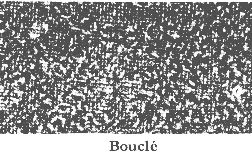
См. также в других словарях:
Imitation (music) — Imitation first at the octave then at the M6 in Bartok s Chromatic Invention , Mikrokosmos, vol. III, no. 91, mm. 1 4[1] … Wikipedia
imitation — imitational, adj. /im i tay sheuhn/, n. 1. a result or product of imitating. 2. the act of imitating. 3. a counterfeit; copy. 4. a literary composition that imitates the manner or subject of another author or work. 5. Biol. mimicry. 6. Psychol.… … Universalium
example — I (New American Roget s College Thesaurus) n. sample, specimen, piece; instance, case, illustration; pattern, type, standard, copy, model, idea; precedent; warning; problem, exercise. See conformity, imitation. II (Roget s IV) n. 1. [A… … English dictionary for students
Imitation — (Roget s Thesaurus) < N PARAG:Imitation >N GRP: N 1 Sgm: N 1 imitation imitation Sgm: N 1 copying copying &c. >V. Sgm: N 1 transcription transcription Sgm: N 1 repetition repetition duplication reduplication Sgm: N … English dictionary for students
Mirrors for princes — The mirrors for princes (Latin: specula principum or rather, principum specula, German: Fürstenspiegel) refer to a genre – in the loose sense of the word – of political writing during the Early Middle Ages, Middle Ages and the Renaissance. They… … Wikipedia
The Imitation of Christ — This article is about the 15th century book by Thomas à Kempis. For other uses, see Imitation of Christ (disambiguation). The Imitation of Christ … Wikipedia
An Apology for Poetry — Philip Sidney. Sir Philip Sidney wrote An Apology for Poetry (or, The Defence of Poesy) in approximately 1579, and it was published in 1595, after his death. It is generally believed that he was at least partly motivated by Stephen Gosson, a… … Wikipedia
Waiting for Godot — Infobox Play name = Waiting for Godot image size = 200px writer = Samuel Beckett characters = Estragon Vladimir Lucky Pozzo Boy date of premiere = January 5th, 1953 Waiting for Godot is a play by Samuel Beckett, in which two characters wait for… … Wikipedia
Academy Award for Best Supporting Actress — Performance by an Actress in a Supporting Role is one of the Academy Awards of Merit presented annually by the Academy of Motion Picture Arts and Sciences (AMPAS) to recognize an actress who has delivered an outstanding performance while working… … Wikipedia
Academy Award for Best Picture — Best Picture redirects here. For other uses, see Best Picture (disambiguation). Academy Award for Best Picture Awarded for Best Picture of the Year Presented by Academy of Motion Picture Arts and Sciences Country United States … Wikipedia
Tragic Optimism for a Millennial Dawning — ▪ 1999 Introduction by Stephen Jay Gould Stephen Jay Gould, Professor of Geology and Curator of Invertebrate Paleontology at Harvard University since 1973, has gained worldwide renown as a paleontologist, evolutionary biologist, and, not least,… … Universalium
